
Multi-Site Management
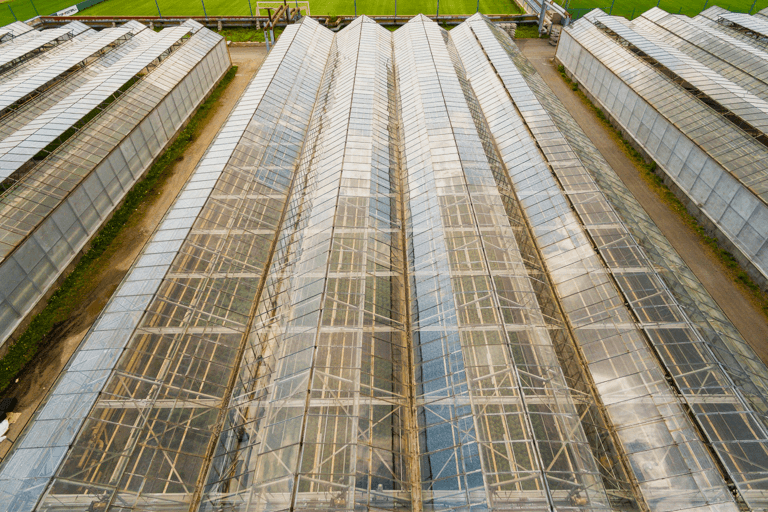
Mexican greenhouse reduced errors 50% and achieved uniform performance across sites.
Sera’s intelligence layer unified data from disparate systems, enforced consistent protocols via the knowledge base, and delivered centralized reasoning—turning fragmented multi-site operations into scalable, error-resistant execution with automated oversight and no added complexity.
Customer
Commercial vegetable producer
" height="13.104757666951702px" id="SAB0kKdoW" transform="translate(41 26)" width="117.18599676513671px"/></svg>)
Answers to your questions about greenhouse intelligence.
Sera turns complex greenhouse data into clear, actionable understanding. Here’s what commercial growers like you ask most about our platform, implementation, and impact.
The challenge before Sera
Managing multiple sites created persistent friction:
Inconsistent practices across locations led to performance variability—different teams applied protocols differently, causing yield drifts, quality gaps, and resource waste.
High error rates from lack of centralized visibility: Manual tracking, separate climate systems, and scattered logs made anomalies hard to spot early.
Time-intensive coordination: Management spent excessive hours aggregating reports, troubleshooting remote issues, and aligning teams—delaying decisions and increasing overhead without proportional gains.
Scaling limitations: Adding sites amplified silos and oversight load—best practices from the flagship took too long to roll out, and junior staff lacked uniform guidance.
How Sera helps
Sera deployed as the reasoning layer above existing climate computers, sensors, and logs across all sites—ingesting data from varied systems (e.g., Priva at one, Hoogendoorn at another, manual logs at others) while activating the enterprise knowledge base with company-wide SOPs, thresholds, and site-specific rules. It enabled:
Unified visibility: One always-current picture for cross-site comparisons—e.g., "Dry-back consistency Site A vs. Site B this week" or "Energy use per kg yield multi-site benchmark."
Standardized operations: Knowledge base enforced uniform protocols (e.g., irrigation refresh targets, IPM thresholds, energy rules) regardless of local hardware or team experience—recommendations and alerts aligned instantly.
Automated monitoring and orchestration: Daily briefs aggregated deviations enterprise-wide; workflows triggered protocol actions (e.g., EC stacking detected → push flush checklist + follow-up task); high-priority alerts routed intelligently (crop-impact to growers, hardware to tech leads).
Instant diagnostics via assistant: Ask "Why performance drift at Site C?" → get root-cause with correlations and prevention steps—no manual exports or travel needed.
Centralized decision support: Shifted from fragmented reporting to proactive, data-backed oversight—freeing management for strategy over routine checks.
No custom integrations or major hardware—just better reasoning, normalization, and knowledge activation over existing data to bridge site gaps.
The results
50% reduction in error rate—through standardized processes, automated monitoring, and protocol enforcement that caught inconsistencies early.
Improved consistency across locations—Uniform performance, reduced variability in yields, quality, and resource use—enhancing overall productivity.
Significant time savings—Automated oversight and reporting freed management resources from manual compilation and remote firefighting.
Why it matters
Multi-site growth shouldn’t mean multiplied chaos—it should compound efficiency. Sera turns silos into a unified enterprise: centralized reasoning for benchmarking, knowledge base for instant protocol rollout, automated workflows for consistency, and natural-language insights that leave dashboards behind. This case shows how Sera enables scalable operations with lower risk, fewer errors, and reclaimed bandwidth—making expansion a strength, not a strain, even across diverse systems and teams.