
Water Usage Efficiency
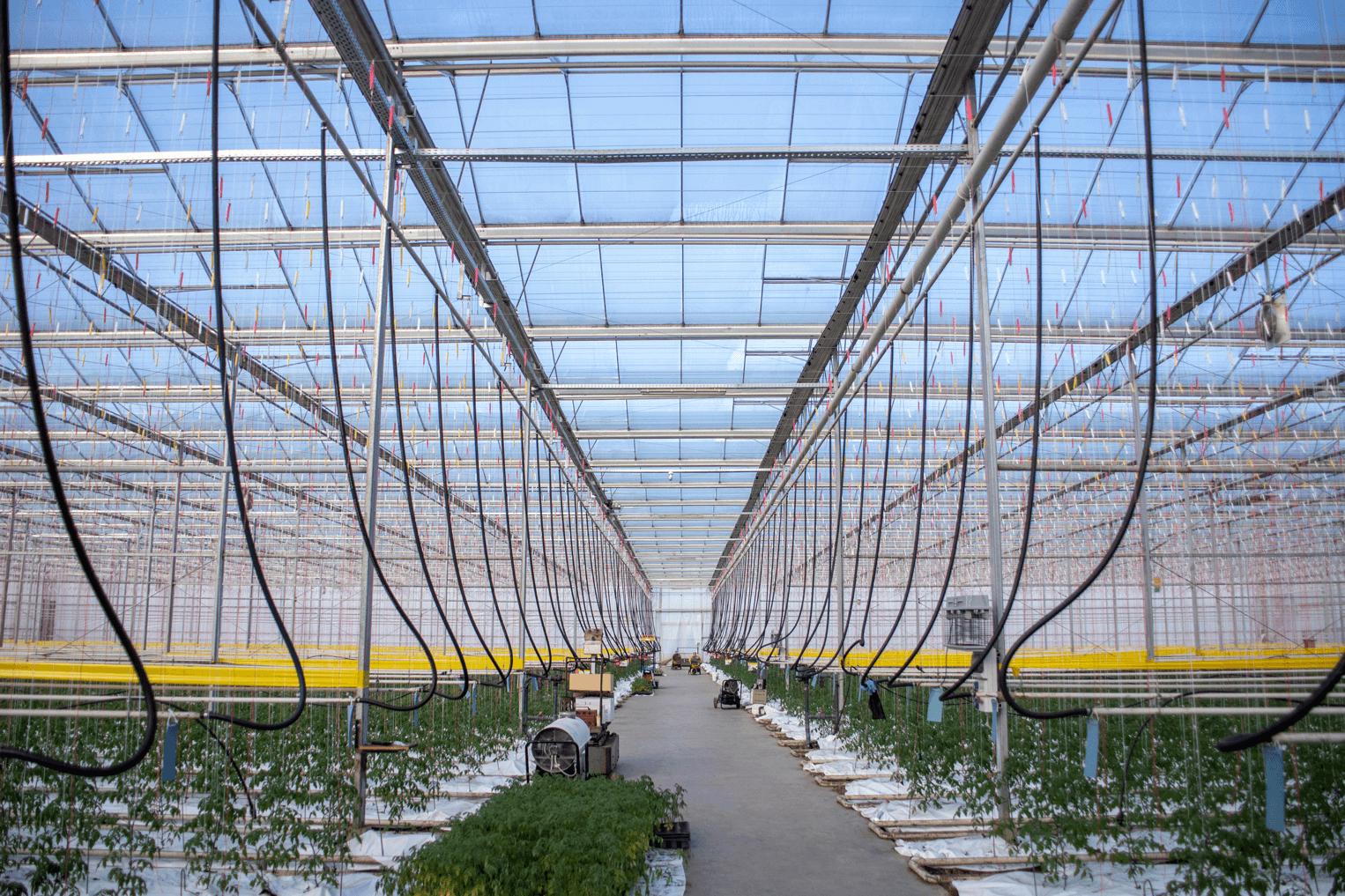
Mexican greenhouse reduced water and fertilizer costs 5–10% with precise root-zone management.
Sera’s reasoning layer interpreted substrate WC/EC dynamics, drain patterns, climate drivers, and crop protocols to deliver plain-English insights and tailored irrigation recommendations—optimizing timing, volume, and refreshment so plants got exactly what they needed without excess leaching or waste.
Customer
Commercial vegetable producer
" height="13.104757666951702px" id="SAB0kKdoW" transform="translate(41 26)" width="117.18599676513671px"/></svg>)
Ready to cut water and fertilizer waste without risking crop performance?
See how Sera can optimize root-zone efficiency in your greenhouse.
The challenge before Sera
Water and fertilizer efficiency is critical in substrate-grown crops, but this operation faced:
Inconsistent irrigation timing: Fixed or threshold-based schedules led to over-watering (wasted water/fert, risk of root issues) or under-watering (stress, reduced uptake).
Nutrient waste: Excessive leaching or poor EC refreshment caused fertilizer runoff, higher costs, and environmental impact without proportional crop benefit.
Lack of cause-effect visibility: Teams couldn’t quickly see why drain % was low, EC stacking occurred, or dry-back accelerated—adjustments stayed reactive, manual, and variable.
Balancing trade-offs: Pushing deficit for quality/generative steering risked uneven hydration; conservative watering inflated inputs without yield gains.
How Sera helps
Sera acted as the intelligence layer above climate computers, substrate sensors (WC/EC at depths), drain logs, irrigation events, and the grower’s uploaded protocols/SOPs. It continuously reasoned over root-zone physics, transpiration demand, and site context to:
Explain status in natural language: "Drain % averaged 4.2% this week—below target 6–8%; EC stacking to 4.5 mS/cm from insufficient refreshment volume. Projected: Minor uptake limitation if uncorrected."
Recommend precise adjustments: Optimize cycle timing/volume based on real-time dry-back rates, EC-drip/drain ratios, radiation, and VPD—e.g., "Increase morning shot 12% on affected slabs to refresh EC to 3.8 mS/cm per your generative protocol."
Deliver instant guidance via chat: Ask "Why low drain % in Sector B?" or "How to cut water use without stress?" → get contextual root-cause + protocol-aligned suggestions (e.g., extend interval 15 min during low radiation, add short pulse if dry-back >16%).
Automate smart orchestration: Shift from static schedules to demand-aware control—trigger refresh cycles only when needed, suppress excess volume during low-transpiration periods, and route alerts for high-impact deviations.
Enforce consistency: Knowledge Base captured their fertigation recipes, drain % targets, EC stability rules, and crop-specific tolerances so every recommendation stayed tailored, repeatable, and safe across zones/shifts.
No new hardware or major changes—just superior interpretation and knowledge activation over existing data to close efficiency gaps.
The results
5–10% reduction in water usage and fertilizer costs—through precise timing and volume control that minimized overwatering, leaching, and nutrient waste.
Optimized plant health and productivity—Maintained ideal hydration and nutrient availability, supporting consistent growth, quality, and yield without stress or defects.
Sustainable operations—Reduced runoff and input overuse, lowering environmental footprint while preserving or improving crop performance.
Why it matters
Water and fertilizer efficiency isn’t about cutting volume arbitrarily—it’s about matching delivery to real plant demand using cause-effect reasoning instead of timers or averages. Sera turns irrigation from a cost driver into a precision tool: tighter dry-back/EC control, minimized waste, and protocol-driven consistency that leaves dashboards behind for natural-language insights and automated actions. This case shows how Sera’s intelligence layer delivers measurable OpEx savings and sustainability gains in water-sensitive operations, scalable across sites and crops.